
Discover how to make apple cider vinegar from scraps for a deliciously scented, natural cleaning agent you can use right in your own home.
This post may contain affiliate links. Please read our disclosure policy.
Apple cider vinegar is notorious for its touted health benefits. But what if I told you that you can also use it for cleaning?
Not only can you use it to clean your home, but it can also be made at home completely from scratch. What a dream for all the crunchy moms out there!
Now, I can’t say that I’ve been brewing my own vinegar for very long, but I do have a little experience with fermenting and I have personally used vinegar for cleaning my home for years now.
I can attest that it works wonderfully, killing bacteria, neutralizing odors, and cutting through grime.
I use it to clean my bathroom, my kitchen, and my glass and windows. It is so versatile which is why I find it so useful to know how to also make it myself. I mean, vinegar is cheap, but why not put those apple scraps to use after making an apple pie and having lots of scraps leftover?
Making vinegar yourself is gentler on the environment (since it reduces packaging and produces less food waste) and all around more affordable since you use what you already have.
Benefits of cleaning with apple cider vinegar
- Non toxic and very affordable
- Acidic nature makes it great for most household cleaning chores
- Can be mixed with water (1:1 ratio) to gently clean many different types of surfaces
- Kills bacteria and neutralizes odors

Can I use other fruit scraps?
You can absolutely make vinegar from other fruit scraps like oranges, limes, or lemons, or you can even use grapes and strawberry remnants. Practically anything that has natural sugars can be fermented to create vinegar. You can even store fruit scraps in the freezer in a bag until you’ve acquired enough to make a homemade vinegar. How easy!
What exactly is fermentation?
Apple cider vinegar is essentially fruit that undergoes a fermentation process that turns it into a highly acidic liquid.
Fermentation is the process of a sugar being broken down by naturally occurring yeast into alcohol or acid. In this case, apple peels and sugar ferment into acetic acid (vinegar).
How long can I let my scraps ferment for?
Let your scraps ferment for about 3 weeks or so. However, allowing it to ferment longer will not hurt anything, but it will make the acidity much higher and will need to be diluted more when using the vinegar to clean with.
Keep in mind that fermentation depends heavily on the temperature in the environment. 55-75ºF is the best temperature for the fermentation process. Remember also that cooler temperatures also drastically slow the fermentation process.
Now that you see what all the fuss is about, let’s talk about how to make apple cider vinegar from scraps… It’s probably a lot easier than you expected!
How to Make Apple Cider Vinegar from Scraps
Supplies | how to make apple cider vinegar from scraps
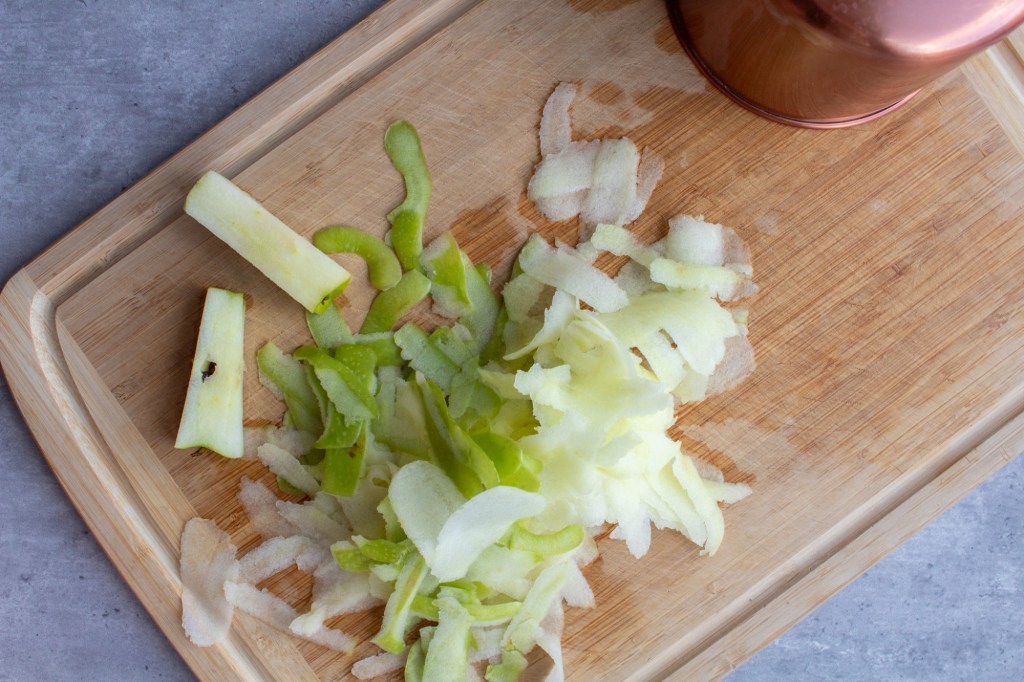
1 cup apple scraps (peels, core, etc.) 2-4 apples
2 tsp sugar
1 16-oz wide-mouth glass jar with silicone fermenting lids
1 cup water
Steps | how to make apple cider vinegar from scraps
Start by sanitizing the glass jar with hot soapy water, rinsing, and drying with a clean towel.
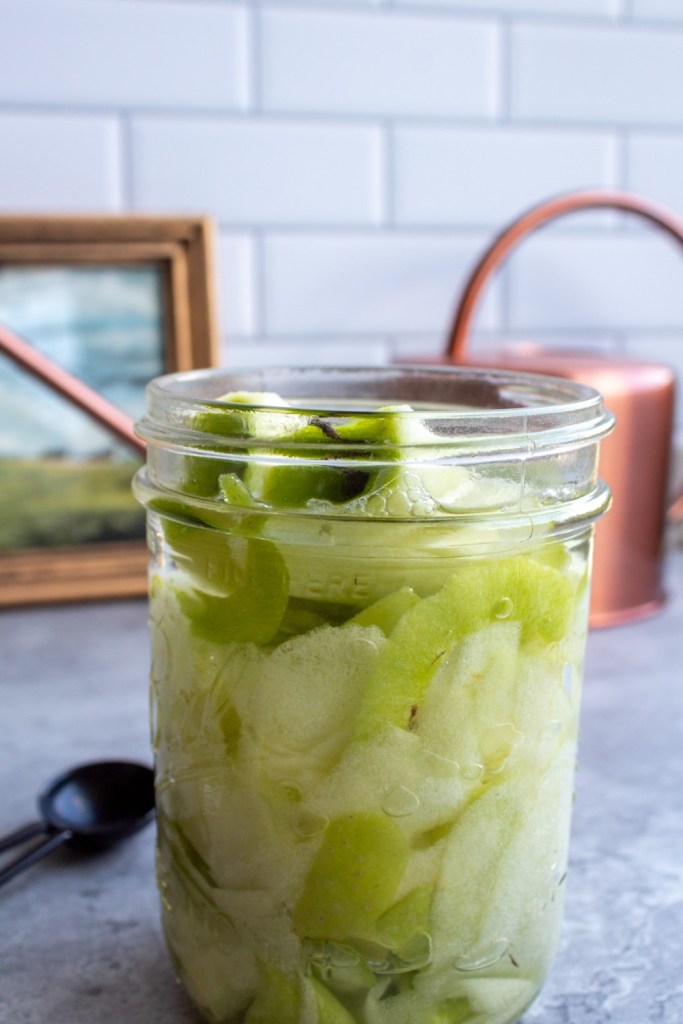
Gather apple peels/scraps and fill the jar with them. Stuff them tightly in.
Add the sugar into the jar and then fill with water until the apple scraps are covered. Try to leave a little room at the top.
Place and secure lid on top, shaking lightly to mix the contents. Set in a cool, dark place for 3-4 weeks to ferment.
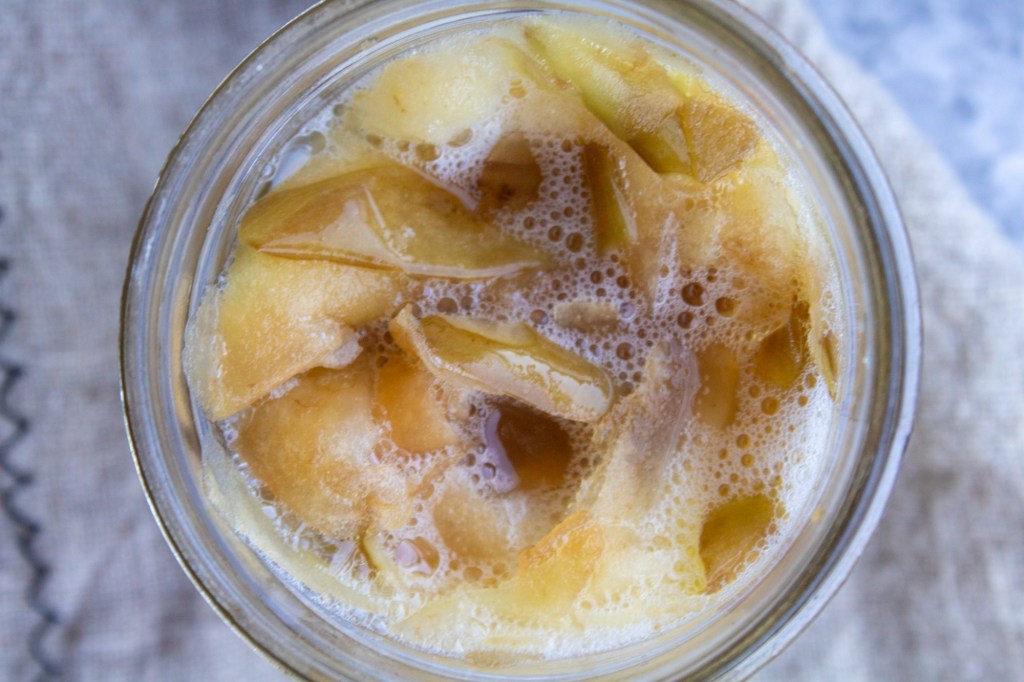
When fermentation is in process the liquid will lightly bubble from the carbonation produced.
Vinegar will be cloudy once it’s finished. Once done and fermented, strain the scraps out using a colander placed over another jar of the same size.
Replace cap and store in the fridge until ready to use.
Tips for Success | how to make apple cider vinegar from scraps
You can use metal lids if you prefer. Using metal lids with glass jars will cause some rusting once fermentation by the time it’s complete. My solution: Use baking soda and vinegar or baking soda and lemon juice to scrub rust off. Dry thoroughly afterward.
Do not, I repeat, DO NOT forget to burp your vinegar about every day or so if you choose to use metal lids. Doing this allows the gasses to escape and helps avoid combustion. No broken glass when you follow this important rule.
You can opt out of using any lid and place a cheesecloth tightly over the top for covered ventilation and rubber band this around the opening.
To check if fermentation is complete, check for bubbly activity and a strong, sour vinegar scent once you remove the lid.
If you don’t have enough apple scraps, you can also use a peeler to shave off extra pieces of apple flesh from the apple to add more volume in.

More Cleaning Posts Like This
10 Things To Declutter This Fall
Natural Cleaning Checklist for the Bathroom
How to Make Apple Cider Vinegar with Scraps

Discover how to make apple cider vinegar from scraps for a deliciously scented, natural cleaning agent you can use right in your own home.
- 16-oz. wide-mouth glass jar with silicone fermenting lids
- mini colander basket
- 1 cup water
- 1 cup apple scraps (peels and core) (2-4 apples)
- 2 tsp granulated sugar
Start by sanitizing the glass jar with hot soapy water, rinsing, and drying with a clean towel.
Gather apple peels/scraps and fill the jar with them. Stuff them tightly in.
Add the sugar into the jar and then fill with water until the apple scraps are covered. Leave a little space at the top.
Place and secure lid on top, shaking lightly to mix the contents. Set in a cool, dark place for 3-4 weeks to ferment.
When fermentation is in process the liquid will lightly bubble from the carbonation produced.
Vinegar will be cloudy once it’s finished. Once done and fermented, strain the scraps out using a colander placed over another jar of the same size.
Replace cap and store in the fridge until ready to use.
You can use metal lids if you prefer. Using metal lids with glass jars will cause some rusting once fermentation by the time it’s complete. My solution: Use baking soda and vinegar or baking soda and lemon juice to scrub rust off. Dry thoroughly afterward.
Do not, I repeat, DO NOT forget to burp your vinegar about every day or so if you choose to use metal lids. Doing this allows the gasses to escape and helps avoid combustion. No broken glass when you follow this important rule.
You can opt out of using any lid and place a cheesecloth tightly over the top for covered ventilation and rubber band this around the opening.
To check if fermentation is complete, check for bubbly activity and a strong, sour vinegar scent once you remove the lid.
If you don’t have enough apple scraps, you can also use a peeler to shave off extra pieces of apple flesh from the apple to add more volume in.

 The Art of Cottagemaking
One thought on “How to Make Apple Cider Vinegar from Scraps”